First Contact Expanding Headache Expertise Resources to Primary Care
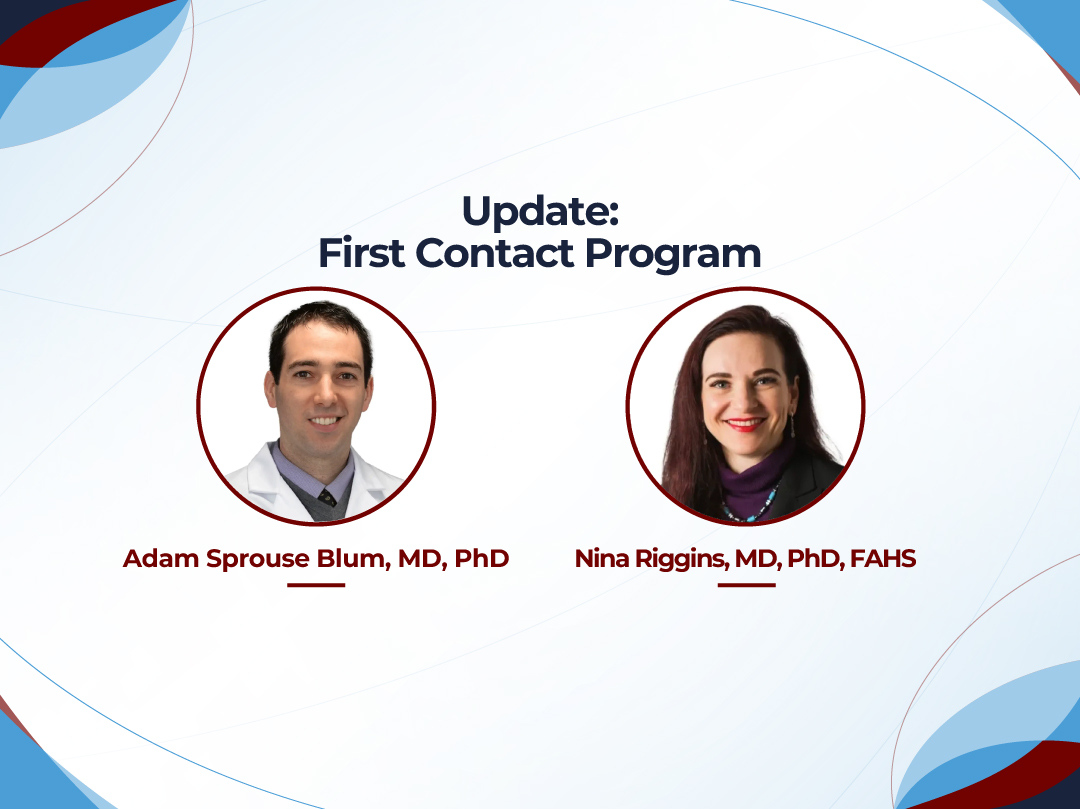
Patients with migraine and other headache disorders are typically first evaluated in a primary care setting. However, primary care clinicians’ comfort and familiarity with caring for patients with these disorders vary. First Contact: Headache in Primary Care was created to support primary care clinicians by providing practical and up-to-date resources to improve clinician comfort and, ultimately, the quality of care patients with migraine and other headache disorders receive.
Adam Sprouse Blum, MD, PhD, one of First Contact’s Co-Chairs, points out that migraine affects an estimated 12-14% of the U.S. population, which is around 44 million people, yet there are fewer than 850 UCNS-certified headache specialists nationwide. Meaning there is just one headache specialist for every ~50,000 patients with migraine. This huge disparity means most patients with migraine cannot see a headache specialist and highlights the need for all clinicians to have access to high-quality, easily accessible educational materials about migraine and other headache disorders.
At the heart of First Contact is a commitment to ensuring clinicians feel comfortable and equipped to care for patients with headache disorders, and that this knowledge translates into patients feeling heard and supported at their first point of contact. “The impact of education extends far beyond First Contact presentations,” says Nina Riggins, MD, PhD, FAHS, FAAN, FANA, the other Co-Chair of the program. “There is a shortage of headache specialists. We believe that providing educational resources, updates on management, and guidelines to all clinicians is crucial to creating an opportunity to access the best treatment plans for people living with migraine and other headache disorders. We are working on First Contact materials with the goal of making clinicians and patients feel seen and supported. We strive for our patients to become free of headache disorder burden.”
Watch the video below to hear from First Contact leaders about how the program is expanding access to headache education for clinicians across a range of care settings:
First Contact focuses on clinicians working in primary care, pediatrics, OB-GYN, women’s health, urgent care, and the emergency department, where the majority of people with headache disorders are seen. Through live presentations (Headache in Primary Care, Migraine in Pediatrics, and A Woman’s Migraine Journey), various podcast episodes, a migraine flowchart, and downloadable tools (such as Patient Guides and Migraine Quick Guides), and further resources, the program delivers clinically relevant information to support real-world patient care.
Expanding Access for Underserved Communities
As part of its broader effort to improve access to headache education, First Contact has prioritized expanding resources for clinicians caring for underserved populations. The program works closely with the American Migraine Foundation, AHS’s sister organization, to make patient guides easier for clinicians to find, download, and share with their patients, including several guides that have been translated into Spanish.
First Contact is also recording its flagship presentations in Spanish and collaborating on a targeted outreach and marketing campaign to ensure these resources reach clinicians serving communities with limited access to specialized headache care. Together, these initiatives will help to reduce barriers related to language, geography, and healthcare infrastructure, helping more patients benefit from evidence-based headache care.
Migraine Care in Urgent and Emergent Settings
An exciting new initiative from First Contact is the development of a new presentation focused on Urgent and Emergent Migraine Care. First Contact listens to clinicians seeking guidance on managing acute and treatment-resistant migraine. So, they brought together headache specialists and urgent and emergency care clinicians to develop a presentation based on the AHS’s new emergency department treatment guidelines. The presentation covers a wide range of considerations, including recognizing red flags for secondary headache, applying evidence-based acute treatment strategies, managing special populations such as pregnancy, and developing effective discharge plans with appropriate follow-up care. For many patients, urgent care centers and emergency departments are their first point of contact, so it is essential to provide resources to clinicians in these settings.
New Podcast Episodes and Conversations
The First Contact podcast is another way the program expands access to timely, practical headache education for clinicians. In the most recent podcast episode, hosts Mia Minen, MD, MPH, FAHS, and Angeliki Vgontzas, MD, interview Annika Ehrlich, DNP, FNP-C, CNRN, AQH, and Robert Shapiro, MD, PhD, to discuss advocating for patients with headache disorders. Drawing on decades of experience, the conversation explores how clinicians and patients can work together to drive policy change, expand research funding, and improve access to care through initiatives such as Headache on the Hill. The discussion reinforces that advocacy is a meaningful extension of clinical care, helping clinicians address burnout, empowering patients to participate in shaping their care, and contributing to real improvements in how headache disorders are recognized and treated. The episode highlights how informed, collaborative advocacy can translate into tangible changes that improve care for people living with headache disorders.
In an upcoming episode, the conversation shifts to health equity and access in headache medicine. Hosts Mia Minen, MD, MPH, FAHS, and Angeliki Vgontzas, MD, speak with Elizabeth Loder, MD, MPH, about barriers faced by underserved patients and communities, including geographic gaps in specialty care, insurance limitations, and challenges within primary care settings. Drawing on clinical experience and research, the discussion examines practical, affordable treatment strategies, models for improving access, and opportunities for closer collaboration between primary care and headache specialists to better meet patient needs.
What’s Ahead for First Contact
First Contact will continue to focus on improving patient outcomes by building clinicians' confidence. They meet clinicians where they are and provide a variety of resources to expand access to headache education, so more patients can receive the care they need.
As the program continues to evolve, First Contact consistently explores new and innovative ways to provide primary care clinicians with useful tools. We are currently exploring case-based learning formats and expanding opportunities for clinician engagement. If AHS members have ideas, thoughts, or feedback, the First Contact team would love to hear from you—please email vnelli@talley.com.