You Cannot Treat What You Do Not Fund: AHS Takes Migraine to Capitol Hill
By Amaal Starling, MD, FAHS
Associate Professor of Neurology at the Mayo Clinic College of Medicine
AHS BoD Member-at-Large and former Co-Chair of the AHS Advocacy Committee
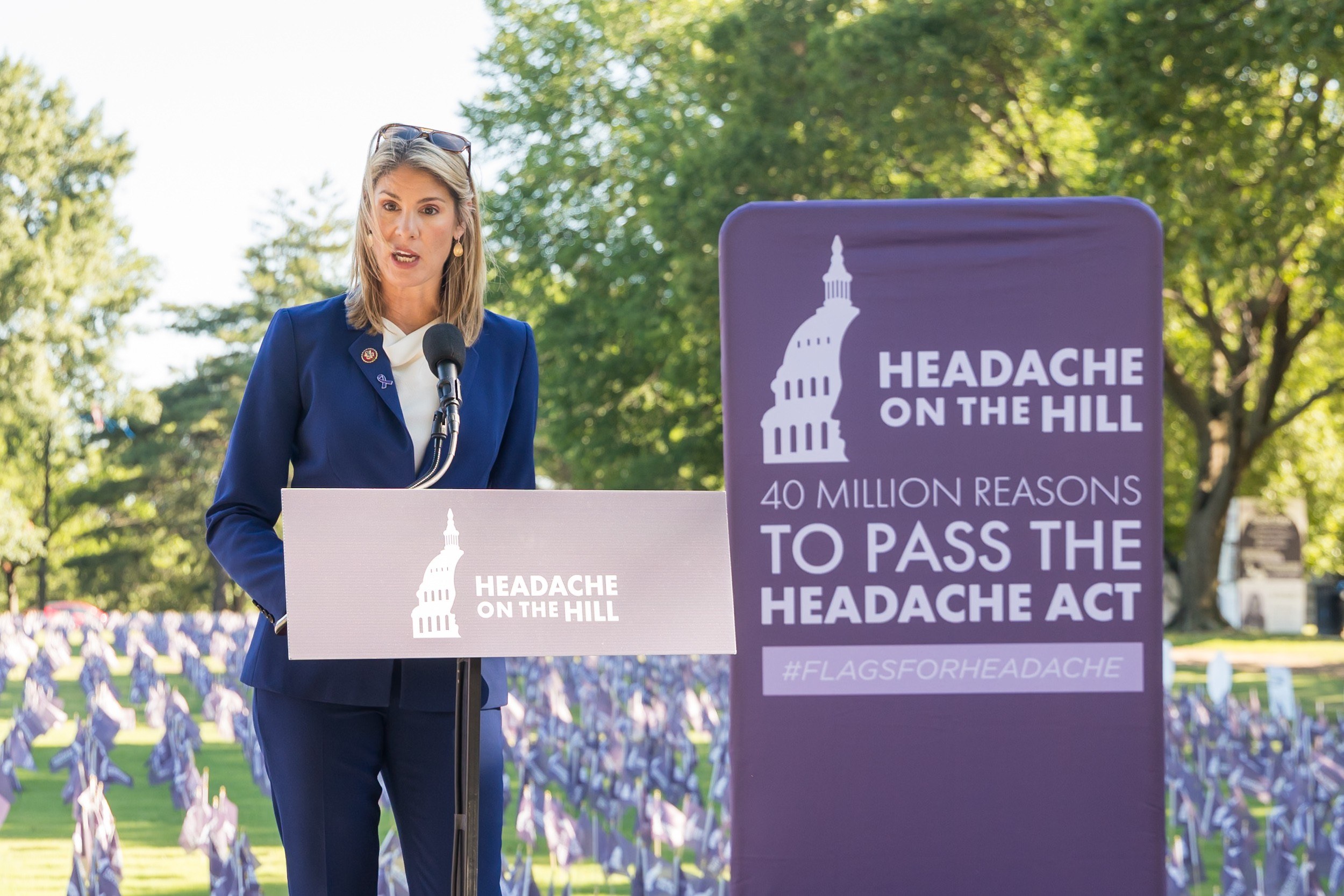
On June 24, 2026, over 30,000 purple flags stood strong near the Washington Monument, together symbolizing the 40 million Americans living with migraine and headache disorders, as advocates, clinicians, and patients gathered for Speak Out for Headache Health at the Flags for Headache installation in Washington, DC.
AHS was proud to support the event through amplification and representation on the ground. As an AHS board member, I had the honor of representing AHS members and headache specialists by speaking to a truth our community knows too well – migraine has no routine biomarker, no scan, no visible wound and for far too long that invisibility has been used as an excuse to dismiss patients, underfund research, and deprioritize policy. I spoke on behalf of the clinicians who pick up the pieces when the system fails our patients. My 16-year-old son, Mohsin, spoke on behalf of kids living with migraine, advocating for schools, communities, and workplaces that better support people who live with this disease.

Representative Lori Trahan, House co-lead on the HEADACHE Act, joined us in person and spoke to the importance of a national strategic plan for migraine and headache disorders. Her presence underscored the bipartisan momentum behind H.R. 5536, the first federal bill in history dedicated solely to migraine and headache disorders.
You cannot treat what you do not fund, and you cannot fund what you do not see. On this day, on Capitol Hill, we made sure that people living with migraine and headache disorders were seen.
A livestream of the event can be accessed on Youtube here. To take action in support of the HEADACHE Act, send a message to your elected officials by completing this quick form.

This article is accurate and up to date at the time of posting, but may not reflect the most recent scientific developments or updates.